Mittwoch, 11. Februar 2026

The AMOC of the Ice Age Was Warmer Than Once Thought


An analysis of sediment cores indicates that North Atlantic waters were relatively warm and continued to circulate even under major climate stress during the Last Glacial Maximum.
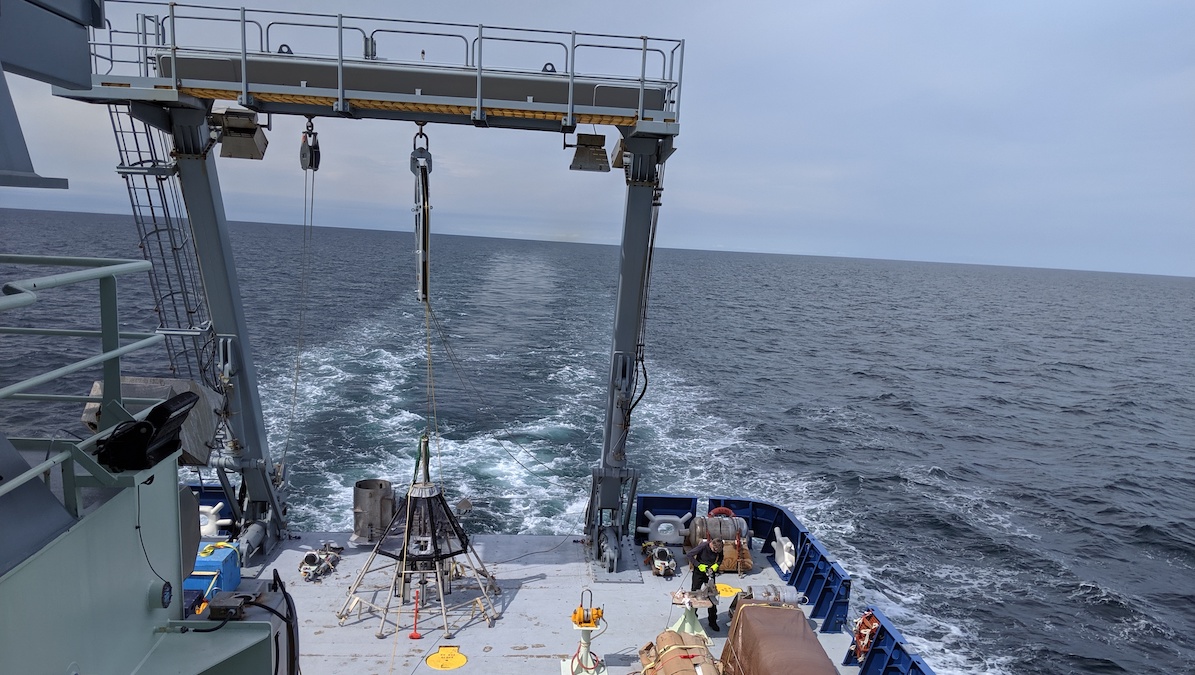
The back deck of a boat as it moves through the ocean.
Sediment cores collected by instruments such as this one on the back of R/V Neil Armstrong shed light on how the North Atlantic Ocean of the last ice age circulated. Credit: Alice Carter-Champion

A major part of the Atlantic Meridional Overturning Circulation (AMOC), a large-scale ocean circulation pattern, was warmer during the peak of Earth’s last ice age than previously thought, according to a new study published in Nature

The study’s results contrast with those from previous studies hinting that the North Atlantic was relatively cold and that AMOC was weaker when faced with major climate stress during the Last Glacial Maximum (LGM), about 19,000–23,000 years ago. 

The findings add confidence to models that scientists use to project how AMOC may change in the future as the climate warms, said Jack Wharton, a paleoceanographer at University College London and lead author of the new study.

Deepwater Data

The circulation of AMOC, now and in Earth’s past, requires the formation of dense, salty North Atlantic Deep Water (NADW), which brings oxygen to the deep ocean as it sinks and helps to regulate Earth’s climate. Scientists frequently use the climatic conditions of AMOC during the LGM as a test to determine how well climate models—like those used in major global climate assessments—simulate Earth systems. 

However, prior to the new study, few data points existed to validate scientists’ models showing the state of NADW during the LGM. Scientists in 2002 analyzed fluid in ocean bottom sediment cores from four sites in the North Atlantic, South Pacific, and Southern Oceans, with results suggesting that deep waters in all three were homogeneously cold.

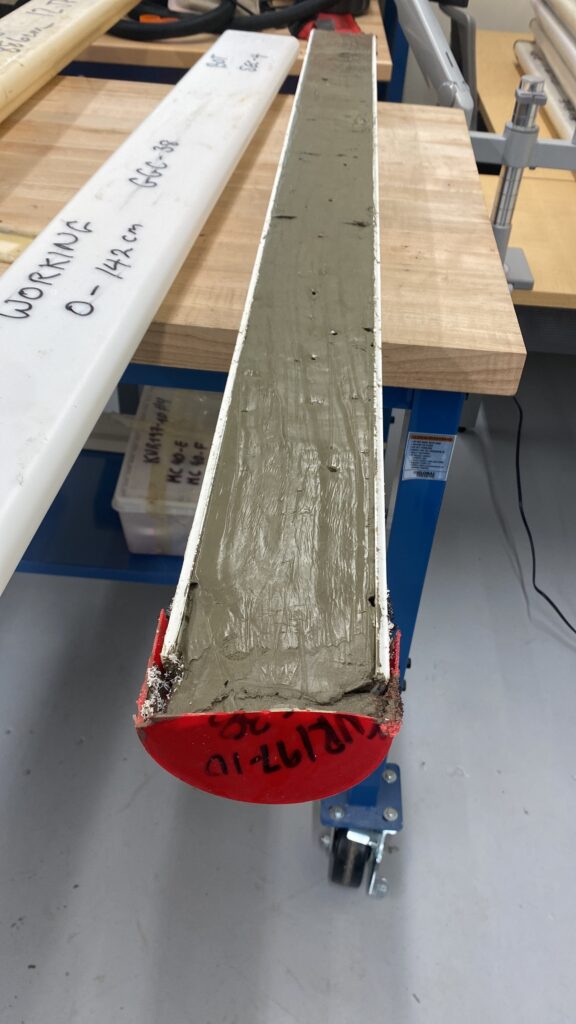
A tube of sediment about a yard long, sliced in half lengthwise so the muddy sediment is visible.
Researchers sampled 16 sediment cores from across the North Atlantic to deduce how waters may have circulated during the peak of the last ice age. Credit: Jack Wharton, UCL

“The deep-ocean temperature constraints during the [Last Glacial Maximum] were pretty few and far between,” Wharton said. And to him, the 2002 results were counterintuitive. It seemed more likely, he said, that the North Atlantic during the peak of the last ice age would have remained mobile and that winds and cold air would have cooled and evaporated surface waters, making them saltier, denser, and more prone to create NADW and spur circulation.

“This is quite new,” he remembered thinking. “What kind of good science could help show that this is believable?”

Wharton and his colleagues evaluated 16 sediment cores collected across the North Atlantic. First, they measured the ratio of trace magnesium and calcium in microscopic shells of microorganisms called benthic foraminifera. This ratio relates to the temperature at which the microorganisms lived. The results showed much warmer North Atlantic Deep Water than the 2002 study indicated. 

Wharton felt cautious, especially because magnesium to calcium ratios are sometimes affected by ocean chemistry as well as by temperature: “This is quite new,” he remembered thinking. “What kind of good science could help show that this is believable?”

The team, this time led by Emilia Kozikowska, a doctoral candidate at University College London, verified the initial results using a method called clumped isotope analysis, which measures how carbon isotopes in the cores are bonded together, a proxy for temperature. The team basically “did the whole study again, but using a different method,” Wharton said. The results aligned. 

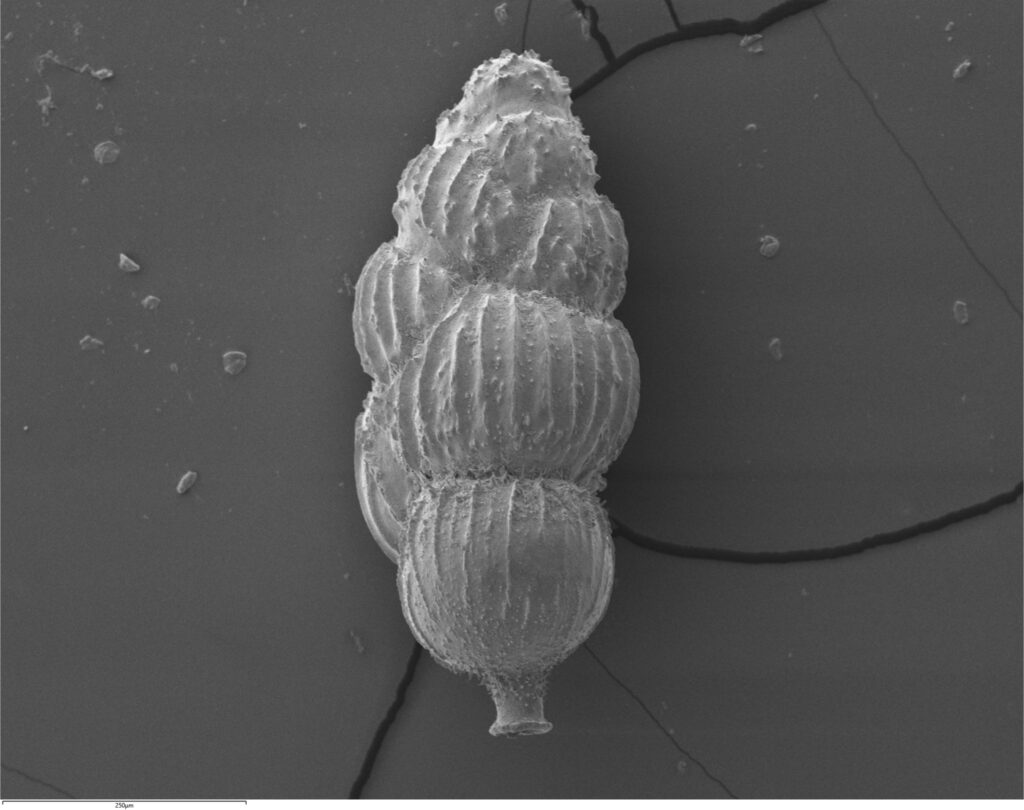
A grayscale microscopic image of the shell of a microorganism.
Ratios of magnesium to calcium contained in benthic foraminifera, tiny microbes living in marine sediment, offer insights into the temperature of North Atlantic waters thousands of years ago. Credit: Jack Wharton and Mark Stanley

Analyzing multiple temperature proxies in multiple cores from a broad array of locations made the research “a really thorough and well-done study,” said Jean Lynch-Stieglitz, a paleoceanographer at the Georgia Institute of Technology who was not part of the research team but has worked closely with one of its authors. 

The results, in conjunction with previous salinity data from the same cores, allowed the team to deduce how the North Atlantic likely moved during the LGM. “We were able to infer that the circulation was still active,” Wharton said. 

Modeling AMOC

The findings give scientists an additional benchmark with which to test the accuracy of climate models, Lynch-Stieglitz said. “LGM circulation is a good target, and the more that we can refine the benchmarks…that’s a really good thing,” she said. “This is another really nice dataset that can be used to better assess what the Last Glacial Maximum circulation was really doing.”

“Our data [are] helping show that maybe AMOC was sustained.”

In many widely used climate models, North Atlantic circulation during the LGM looks consistent with the view provided by Wharton’s team’s results, indicating that NADW was forming somehow during the LGM, Lynch-Stieglitz said. However, no model can completely explain all of the proxy data related to the LGM’s climatic conditions.

“Our data [are] helping show that maybe AMOC was sustained,” which helps reconcile climate models with proxy data, Wharton said. Lynch-Stieglitz added that a perhaps equally important contribution of the new study is that it removes the sometimes difficult-to-simulate benchmark of very cold NADW during the LGM that was suggested in research in the early 2000s. “We don’t have to make the whole ocean super cold [in models],” she said.

Some climate models suggest that modern-day climate change may slow AMOC, which could trigger a severe cooling of Europe, change global precipitation patterns, and lead to additional Earth system chaos. However, ocean circulation is highly complex, and models differ in their ability to project future changes. Still, “if they could do a great job with LGM AMOC, then we would have a lot more confidence in their ability to project a future AMOC,” Lynch-Stieglitz said.

Wharton said the results also suggest that another question scientists have been investigating about the last ice age—how and why it ended—may be worth revisiting. Many hypotheses rely on North Atlantic waters being very close to freezing during the LGM, he said. “By us suggesting that maybe they weren’t so close to freezing…that sort of necessitates that people might need to rethink the hypotheses.”

—Grace van Deelen (@gvd.bsky.social), Staff Writer

Citation: van Deelen, G. (2026), The AMOC of the ice age was warmer than once thought, Eos, 107, https://doi.org/10.1029/2026EO260053. Published on 10 February 2026.
Text © 2026. AGU. CC BY-NC-ND 3.0
Except where otherwise noted, images are subject to copyright. Any reuse without express permission from the copyright owner is prohibited.

Coastal Wetlands Restoration, Carbon, and the Hidden Role of Groundwater


Coastal wetland restoration offers major carbon benefits, and understanding groundwater processes helps explain how these ecosystems store carbon over the long term.
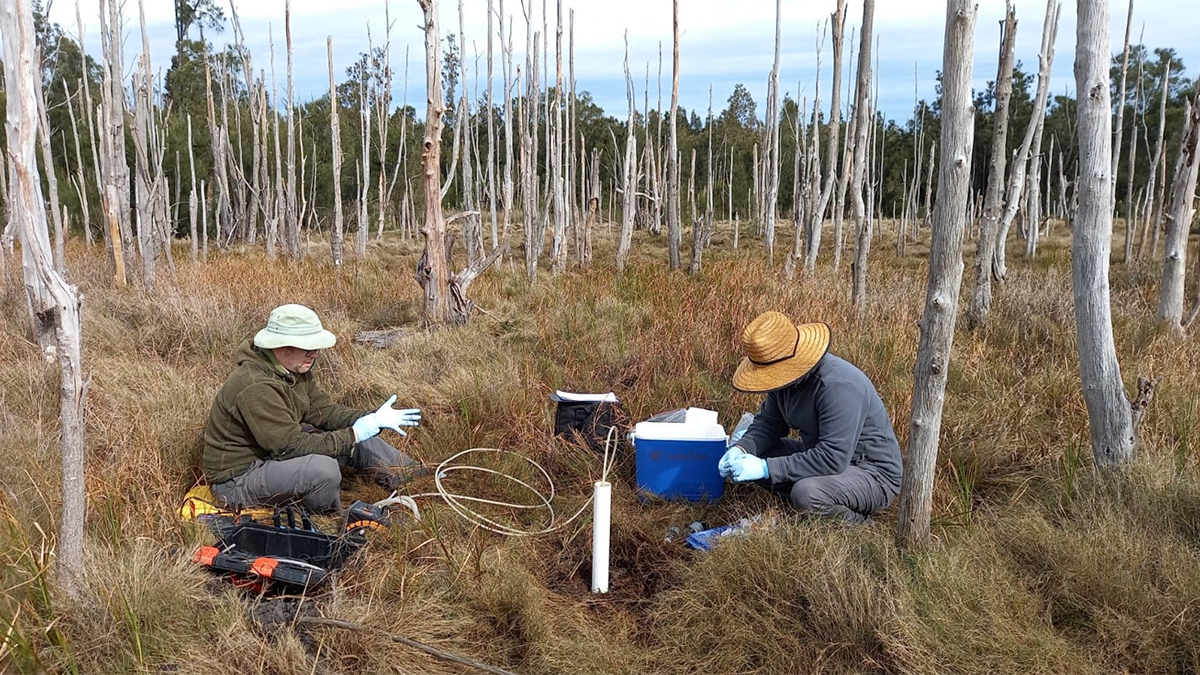
Two scientists collecting samples in a wetland.
Associate Professor Martin Andersen (UNSW, Sydney) and Dr. Mahmood Sadat-Noori (JCU) collecting samples to measure dissolved greenhouse gases (CO and CH4) in groundwater at Tomago Wetlands, NSW, Australia. Credit: Kate Waddington (UNSW, Sydney)
Editors’ Vox is a blog from AGU’s Publications Department.

Coastal (tidal) wetlands are low-lying ecosystems found where land meets the sea, including mangroves, saltmarshes, and seagrass meadows. They are shaped by tides and support a mix of marine and terrestrial processes. However, agricultural and urban development over the past century have drained, modified, or degraded many of these coastal wetland ecosystems and now require restoration efforts.

A new article in Reviews of Geophysics explores how subsurface hydrology and biogeochemical processes influence carbon dynamics in coastal wetlands, with a particular focus on restoration. Here, we asked the lead author to give an overview of why coastal wetlands matter, how restoration techniques are being implemented, and where key opportunities lie for future research.

Why are coastal wetlands important?

Coastal wetlands provide many benefits to both nature and people. They protect shorelines from storms and erosion, support fisheries and biodiversity, improve water quality by filtering nutrients and pollutants, and store large amounts of carbon in their soils. Despite covering a relatively small area globally, they punch well above their weight in terms of ecosystem services, making them critical environments for climate regulation, coastal protection, and food security.

What role do coastal wetlands play in the global carbon cycle?

Coastal wetlands are among the most effective natural systems for capturing and storing carbon.

Coastal wetlands are among the most effective natural systems for capturing and storing carbon. This stored carbon is often referred to as “blue carbon”. Vegetation in these ecosystems, such as mangroves, saltmarsh, and seagrass, take up carbon dioxide from the atmosphere through photosynthesis and transfer it to sediments through roots. These plants can store carbon 40 times faster than terrestrial forests. Because coastal wetland sediments are often waterlogged and low in oxygen, this carbon can be stored for centuries to millennia. In addition to surface processes, groundwater plays an important but less visible role by transporting dissolved carbon into and out of wetlands. Understanding these hidden subsurface pathways is essential for accurately estimating how much carbon wetlands store and how they respond to environmental change.

How has land use impacted coastal wetlands over the past century?

Over the past century, coastal wetlands have been extensively altered or lost due to human activities. Large areas have been drained, filled, or isolated from tides to support agriculture, urban development, ports, and flood protection infrastructure. These changes disrupt natural water flow, reduce plant productivity, and expose carbon-rich soils to oxygen, which can release stored carbon back into the atmosphere as greenhouse gases. In many regions, groundwater flow paths have also been modified by drainage systems and groundwater extraction, further altering wetland function. As a result, many coastal wetlands have shifted from long-term carbon sinks to sources of emissions.

How could restoring wetlands help to combat climate change?

Restoring coastal wetlands can help combat climate change by re-establishing natural processes that promote long-term carbon storage.

Restoring coastal wetlands can help combat climate change by re-establishing natural processes that promote long-term carbon storage. When tidal flow and natural hydrology are restored, wetland plants can recover, sediment accumulation increases, and carbon burial resumes. Importantly, restoration can also reconnect groundwater and surface water systems, helping stabilize (redox) conditions that favor carbon preservation in sediments. While wetlands alone cannot solve climate change, they offer a powerful nature-based solution that delivers climate mitigation alongside co-benefits such as coastal protection, biodiversity recovery, and improved water quality. Getting restoration right is key to ensuring these systems act as carbon sinks rather than sources.

What are the main strategies being deployed to restore coastal wetlands?

Common restoration strategies include removing or modifying levees and tidal barriers, reconnecting wetlands to natural tidal regimes, re-establishing natural vegetation through improving the hydrology of the site, and managing sediment supply. Increasingly, restoration projects are recognizing the importance of subsurface processes, such as groundwater flow and salinity dynamics, which strongly influence vegetation health and carbon cycling. Successful restoration requires site-specific designs that consider hydrology, geomorphology, and long-term sea-level rise.

What are some remaining questions where additional research efforts are needed?

Despite growing interest in wetland restoration, major knowledge gaps remain. One key challenge is quantifying how groundwater processes influence carbon storage and greenhouse gas emissions across different wetland types and climates. We also need better long-term measurements to assess whether restored wetlands truly deliver sustained carbon benefits under rising sea levels and increasing climate variability. Finally, integrating hydrology, biogeochemistry, and ecology into predictive models remains difficult but essential. Addressing these gaps will improve carbon accounting, guide smarter restoration investments, and strengthen the role of coastal wetlands in climate mitigation strategies.

—Mahmood Sadat-Noori (mahmood.sadatnoori@jcu.edu.au; 0000-0002-6253-5874), James Cook University: Townsville, Australia

Editor’s Note: It is the policy of AGU Publications to invite the authors of articles published in Reviews of Geophysics to write a summary for Eos Editors’ Vox.

The logo for the United Nations Sustainable Development Goal 15 is at left. To its right is the following text: The research reported here supports Sustainable Development Goal 15. AGU is committed to supporting the United Nations 2030 Agenda for Sustainable Development, which provides a shared blueprint for peace and prosperity for people and the planet, now and into the future.
Citation: Sadat-Noori, M. (2026), Coastal wetlands restoration, carbon, and the hidden role of groundwater, Eos, 107, https://doi.org/10.1029/2026EO265003. Published on 9 February 2026.
This article does not represent the opinion of AGU, Eos, or any of its affiliates. It is solely the opinion of the author(s).
Text © 2026. The authors. CC BY-NC-ND 3.0
Except where otherwise noted, images are subject to copyright. Any reuse without express permission from the copyright owner is prohibited.

The AMOC of the Ice Age Was Warmer Than Once Thought

  An analysis of sediment cores indicates that North Atlantic waters were relatively warm and continued to circulate even under major c...